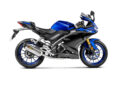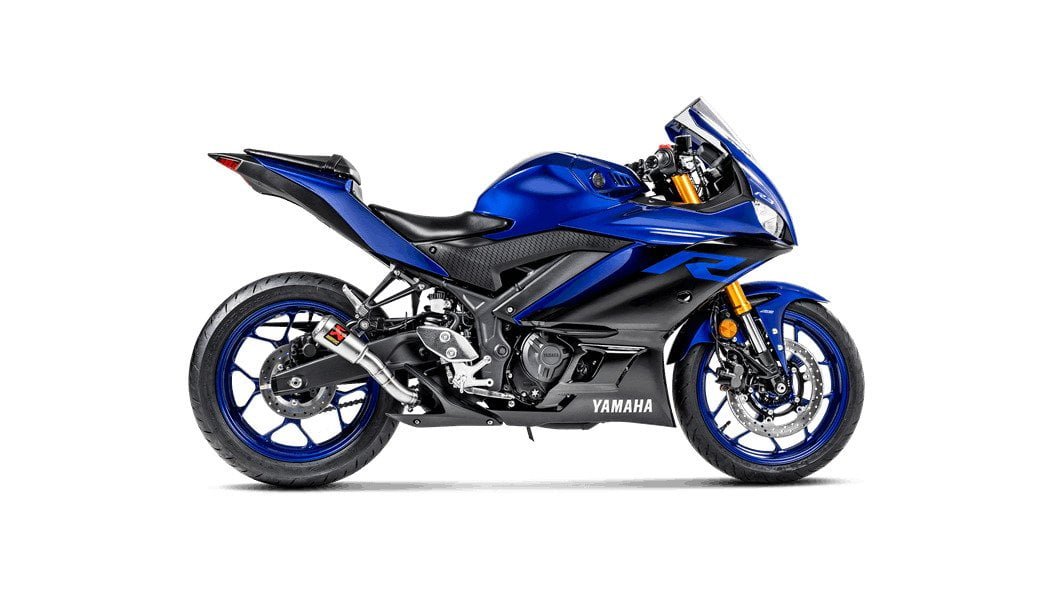
Yamaha YZF-R3 does 0-60 in 5.1 and 0-100 mph in 17.10 seconds
Yamaha was a little late to the low-capacity entry-level sportbike market, which had already seen several new models from competitors over the previous decade.
Yamaha clearly noticed the success Kawasaki was enjoying with the Ninja 250 and Ninja 300 and decided there was an opportunity to cash in.
One effective way to do this was by leveraging the strong reputation of its legendary “R” series, such as the R1 and R6.
In 2015, Yamaha unleashed the YZF-R3 onto the world.
This small, lightweight parallel-twin bike was squarely aimed at challenging what was then one of the most popular entry-level sportbikes – the Kawasaki Ninja 300.
The R3 came equipped with a larger 321 cc parallel-twin engine compared with the Ninja 300’s 296 cc.
Yamaha claimed only 3 hp more power and 1.8 lb/ft more torque than the Ninja.
Despite the bigger engine, Yamaha managed to undercut its main rival in weight, with the R3 coming in at 167 kg dry, 7 kg lighter than the Ninja 300.
When you only have 42 hp, even small weight savings can make a noticeable difference in straight-line performance.

YZF-R3 Dyno Curve / Engine Performance
The Yamaha YZF-R3 produces a respectable 37 hp at 10,500 rpm and 20 lb/ft of torque at 9,000 rpm at the rear wheel.
These are solid numbers that place the YZF-R3 in the middle of the pack among 250–500 cc entry-level sportbikes, although KTM’s 390 series looks more impressive on paper.
The R3 delivers its peak torque quite close to peak power, with only 1,500 rpm separating the two.
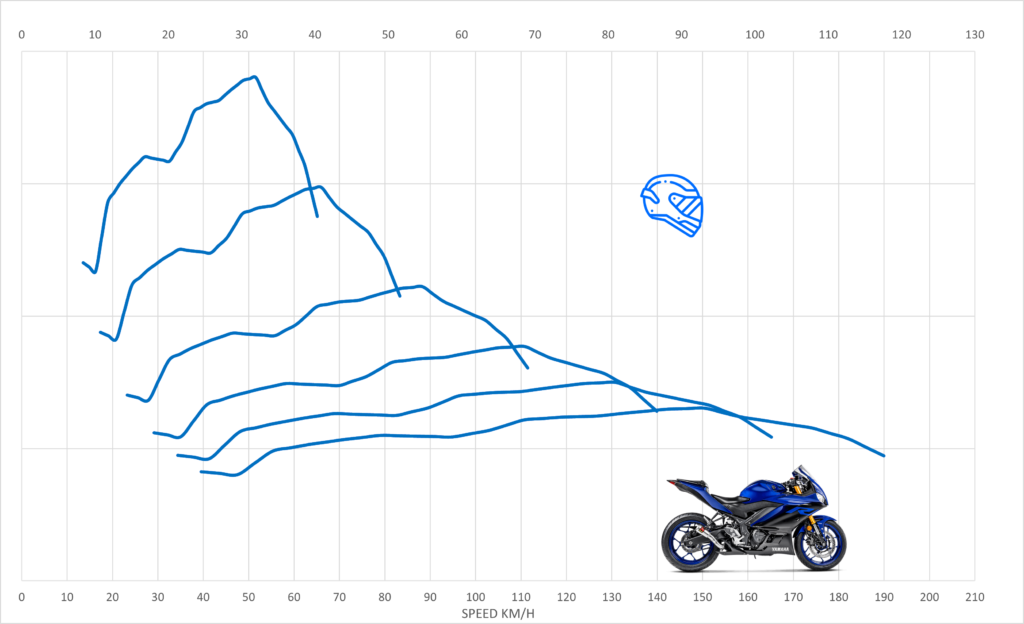
There is strong drive available from 7,000 rpm onward. This is the sweet spot in the power curve and exactly where you want to keep the engine buzzing when you are getting a move on or chasing friends along your favourite roads.
In-gear thrust curve
Even below 7,000 rpm for everyday riding, the R3 drives well from 3,500 rpm all the way up to the point where it really takes off just over 6,000 rpm.
Compared with Kawasaki’s Ninja 300, the R3 engine feels generally more flexible in almost all situations, especially in second and third gear, and from 6,000 rpm upward in the higher gears.
However, the R3 runs longer gearing than the Ninja 300, so its power and torque advantage do not show up as clearly as you might expect.
We will cover that in more detail when we do a back-to-back comparison between the two machines. For now, you can see how the R3 stacks up against the Ninja 400. Here!
 YZF-R3 Acceleration Curve
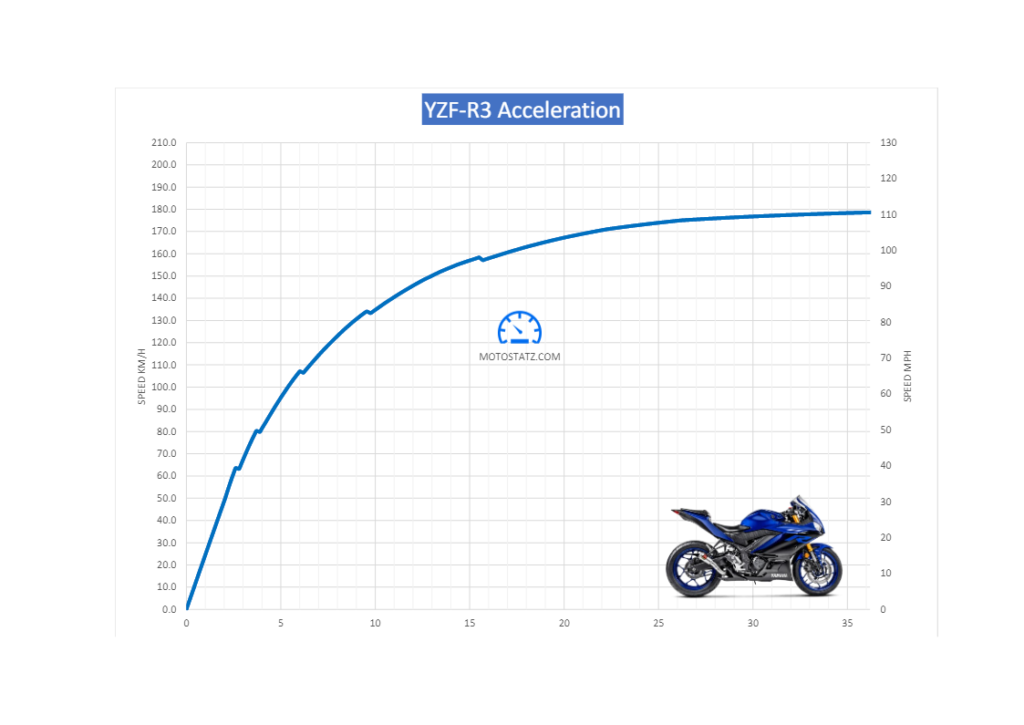
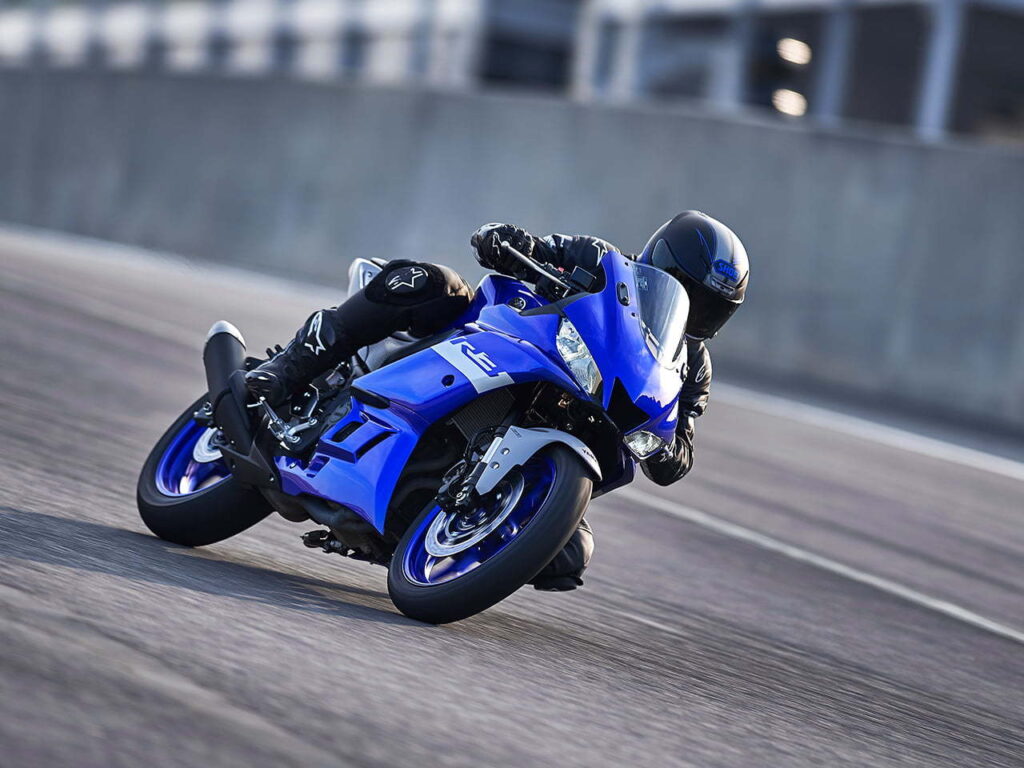
Like its engine performance, the Yamaha R3’s straight-line ability sits somewhere in the middle of the entry-level sportbike class.
It is not the fastest, but it holds its own very respectably.
What is most impressive about almost all the 300 cc+ motorcycles in this category is that they can all achieve 0-60 mph in under six seconds.
That is significantly more performance than a typical entry-level car, such as a Toyota Yaris or similar.
The R3 is no exception. With a perfect launch, it can accelerate from 0-60 mph in 5.10 seconds, 0-80 mph in 8.73 seconds, and 0-100 mph in 17.13 seconds.
The quarter-mile benchmark is covered in a flat 14 seconds with a terminal speed of 95 mph.
This beats one of its main rivals, the Ninja 300 (which we tested earlier), but it does not quite have the legs of its bigger brother, the Ninja 400.
That bike leads the class and comes close to nipping at the heels of the next tier up, such as the MT-07.
Amazingly, the R3 is faster than the restricted A2/LAMS version of the CBR650R, despite having only half the engine capacity.
Kawasaki Ninja 400 vs Yamaha YZF-R3 HERE
If you hold on tight and tuck in really well, the Yamaha R3 is good for a top speed of 112 mph.
Our test bike did not hold onto its power quite as well as some other R3s from 11,000 rpm, so your results may vary.
With a tailwind or on a slight decline, you can reach a genuine 120 mph just as you kiss the limiter in sixth gear.
For the best acceleration, the YZF-R3 is not too fussy. You can shift anywhere between 10,500 rpm and 12,000 rpm and still achieve consistent times.
As with all low-capacity, low-power bikes, acceleration figures can vary greatly depending on the rider and conditions.
A lighter rider versus a heavier one, or accelerating into a headwind versus with a tailwind, will make a noticeable difference.
An extra 10 kg of rider weight or a 10 mph headwind will affect a 40 hp bike far more than it would a 200 hp machine.
If you are considering the YZF-R3 as your first sportbike, it may not be the fastest option available, but it will certainly put a smile on your face.
It delivers more than enough straight-line performance to get the blood flowing.
| Yamaha YZF-R3 Acceleration | |
| Speed | Time |
| 0-10 mph | 0.57 |
| 0-20 mph | 1.31 |
| 0-30 mph | 1.98 |
| 0-40 mph | 2.85 |
| 0-50 mph | 3.93 |
| 0-60 mph | 5.10 |
| 0-70 mph | 6.82 |
| 0-80 mph | 8.73 |
| 0-90 mph | 11.83 |
| 0-100 mph | 17.13 |
| 0-110 mph | 30.677 |
| SS/QM | 14.07/95 mph |
| SS/KM | 26.926/108 mph |
| SS/Mile | 39.087/112 mph |
| Top Speed | 112.4 mph |