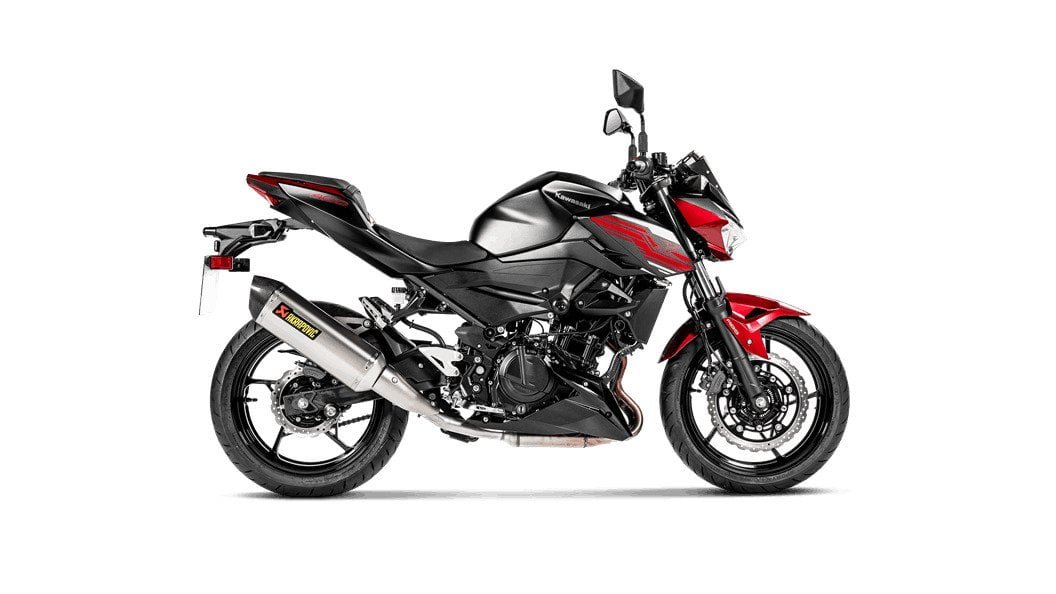
Z400 can accelerate from 0-60 mph in 4.34 seconds
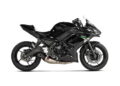
There are plenty of naked variants of fully faired motorcycles. The Kawasaki Z400 is one of the most popular and serves as the naked sibling of the excellent Ninja 400.
It competes directly with the KTM 390 Duke, Honda CB500F, Yamaha MT-03, and its own smaller siblings, the Z250 and Z300.
All are naked learner-friendly bikes fighting for attention in a fiercely competitive segment.
The Z400 shares the same chassis and wheels as the Ninja 400 and is powered by the same capable 399 cc parallel-twin engine, which produces a claimed 48 horsepower at 11,000 rpm.
The Kawasaki Z400 is a lively, rorty naked bike with strong performance.
It is designed to appeal to new riders who want an affordable yet high-performing learner motorcycle that offers better everyday street practicality than its sportier, fully faired counterparts.

Z400 Dyno and Engine Performance
The Kawasaki Z400’s engine is class-leading.
Like its Ninja 400 sister, it packs a strong punch and delivers particularly good performance for a sub-400 cc machine.
It uses the exact same 399 cc parallel-twin engine as the Ninja 400, with no detuning – unlike many naked bikes that share powerplants with their fully faired siblings.
On the dyno, our test Z400 produced a little less power than the Ninja 400, making 43 horsepower at 11,000 rpm.
Torque was also slightly lower, with 25 ft-lb arriving at 7,500 rpm.
These are still impressive figures for a small-capacity twin. The minor differences can be attributed to normal variations between individual bikes and conditions on the day.
It is also worth noting that our Ninja 400 test bike had an aftermarket exhaust, giving it a small advantage
.The power is delivered across a broad, usable range and really starts to come alive above 7,000 rpm.

Kawasaki Z400 Thrust Curve
Like the Kawasaki Ninja 400, the Z400’s power delivery flattens off from around 9,500 rpm all the way to the 12,500 rpm redline.
This characteristic is actually beneficial on tight country roads and on track, where you can hold a gear a little longer than with many rivals.
Down low, the Z400 responds very well, building strong torque from 4,000 rpm and screaming eagerly all the way to 12,500 rpm and beyond.
Below 4,000 rpm, it is not quite as strong, but with the engine’s size and the relatively low gearing, you rarely find yourself there except in slow-moving traffic or first and second gear, where acceleration is still perfectly adequate.
In higher gears, the Z400 performs best above 4,000 rpm, but to keep up with (or stay ahead of) your friends, like most small-capacity engines, it rewards being revved hard.
From 7,000 rpm upwards, it becomes very accelerative and responsive, leaving many competitors behind when you really get on the throttle.
The Kawasaki Ninja 400 set a high bar with its performance figures, leading the sub-500 cc class in our testing and even beating the larger-capacity Honda CBR500R in outright acceleration.
The Z400 does not disappoint, although it trails its faired sibling by a small margin.
It achieves 0-60 mph in a very capable 4.34 seconds and 0-100 km/h in 4.57 seconds.
These are impressive times for small-capacity entry-level learner motorcycles.
The class leaders are all dipping under five seconds for both benchmarks, which never ceases to amaze.
The Z400 can’t quite match the Ninja 400 to 60 mph, but it stays right on its heels. It beats the larger, fully faired Honda CBR500R by almost half a second and sees off the Yamaha YZF-R3, while trailing one of its closest rivals, the KTM 390 Duke, by just two tenths.
The quarter-mile is a figure everyone wants to know, and the Z400 delivers once again. It runs 13.34 seconds with a terminal speed of 98 mph.
0-100 mph follows shortly after in 14.26 seconds – only a tenth behind the Honda CBR500R, but more than a second and a half quicker than the KTM 390 Duke.
Above 60 mph, the Ninja 400 starts to pull away from the Z400, despite sharing the same engine and power output.
Much of this can be attributed to the Ninja’s full fairing versus the naked Z400’s exposed riding position.
Our particular Ninja 400 test bike also seemed to be a strong example
Extracting these times required hard work. If you are used to riding big, powerful motorcycles, you often slip the clutch quite hard for good launches, as aggressive dumps can cause bogging or wheelies.
On smaller, lower-powered bikes like the Z400, a more aggressive clutch dump or slip often gives better results.
The Z400 is not fussy about shift points. Changing gear anywhere between 11,000 and 12,000 rpm delivers consistent elapsed times.
It also benefits from a broad spread of peak horsepower from 9,000 to 12,000 rpm, which makes life easier.
Being a naked bike, wind resistance has a big effect on performance. A good, tight tuck versus a poor one made a difference of around 1.4 seconds to 0-100 mph and shaved roughly 4 mph off the top speed.
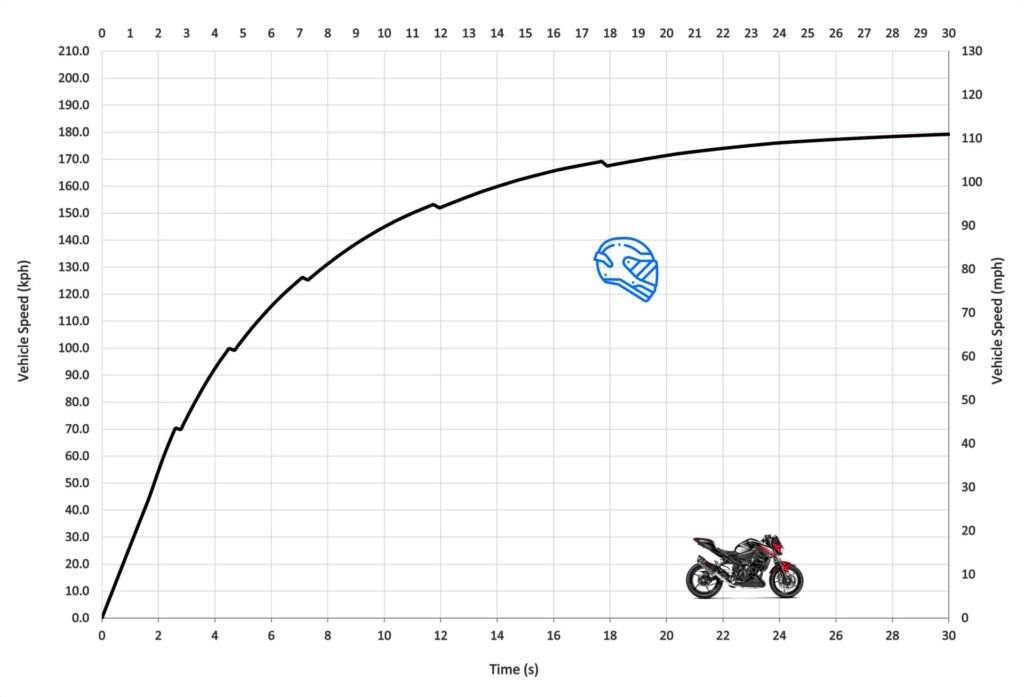
Kawasaki Z400 Top Speed 112 mph
As mentioned, you really need to tuck in tightly for any meaningful top-speed run.
There is little point attempting one even into a mild headwind, as the modest 40 horsepower is quickly swallowed up by air resistance.
Fortunately, the location where we carry out our testing is often very windy in the afternoon and evening, but early mornings are frequently calm with little or no wind.
This was the case on the day we tested the Z400 for acceleration and top speed, and we were grateful for it.
If you are chasing outright top speed, the fully faired Kawasaki Ninja 400 is the better choice. You can expect around 10 mph more than the 112 mph we achieved with the naked Z400.
That said, our Ninja 400 test bike only reached 116 mph, but 120 mph is not uncommon for these machines.
It is still highly impressive for a naked bike with roughly 40 horsepower that can crack 100 mph-plus even in less-than-ideal conditions.
We recorded the Z400’s top speed in fifth gear at around 11,800 rpm.
When we engaged sixth gear, the rpm simply dropped to about 10,600 rpm and stayed there.
In fact, the bike even lost a small amount of speed in sixth, so we stayed in fifth to achieve the best terminal velocity of the day.
Your results may vary, but I believe the Z400 has a little more potential if the engine could hold onto its power longer towards the rev limiter.
We have seen this engine respond very well to tuning. A good dyno tune that moves the peak horsepower closer to the redline would likely improve top speed noticeably.
Kawasaki Z400 Acceleration and top speed.
Among your learner-riding motorcycle friends, if you choose the Kawasaki Z400 you will have no trouble keeping up and will often be one of the faster bikes in the group.
You can even hang with larger and faster machines such as the Z650 in all but the most committed, flat-out top-speed runs.
There is also more than enough power to sit comfortably with fast-moving highway traffic and to deliver useful overtaking acceleration from 70 mph.
These higher-speed manoeuvres are best carried out in fourth gear, although you can drop to third if you really need to get a move on – the revs will be singing quite high by then.
Overall, the Kawasaki Z400 is a great little performance bike that offers more than enough for most learner riders.
| Kawasaki Z400 Acceleration | |
| Speed | Time |
| 0-10 mph | 0.55 |
| 0-20 mph | 119 |
| 0-30 mph | 1.81 |
| 0-40 mph | 2.40 |
| 0-50 mph | 3.32 |
| 0-60 mph | 4.34 |
| 0-70 mph | 5.85 |
| 0-80 mph | 7.52 |
| 0-90 mph | 10.28 |
| 0-100 mph | 14.26 |
| 0-110 mph | 26.83 |
| SS/QM | 13.34/98 mph |
| SS/KM | 26.08/109 mph |
| SS/Mile | 38.20/111 mph |
| Top Speed | 112 mph |